Contact Head of Communities and Projects,
Rebecca Rieley
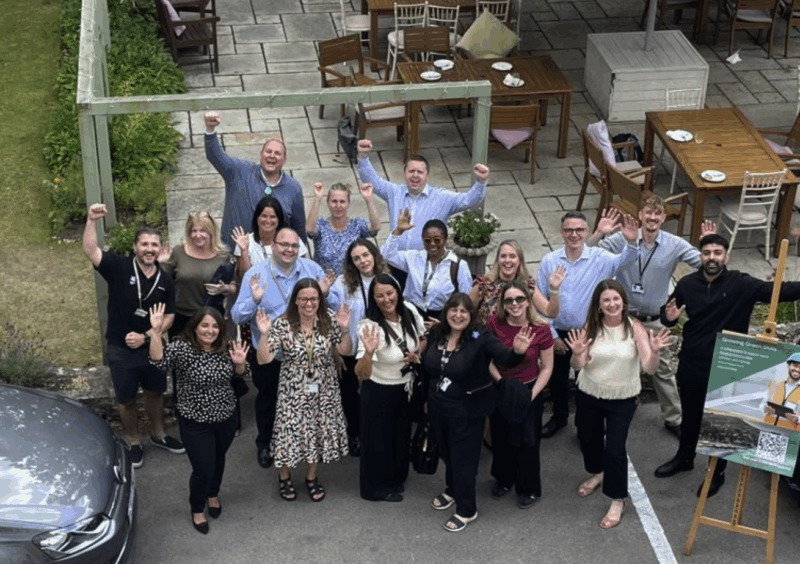
The Growing Green Skills event took place at the Green House Hotel in Bournemouth. We believe in being deliberate; and choosing a hotel that is 100% sustainable, in a town already working to develop its green economy, reflected the purpose of the day: to ground the conversation in place, in people, and in what’s already possible.
We began with coffee on the terrace, and from the start there was a sense that everyone there understood something important: we are standing in front of an opportunity to shape the future of our practices, our communities, and our planet.
Our mission
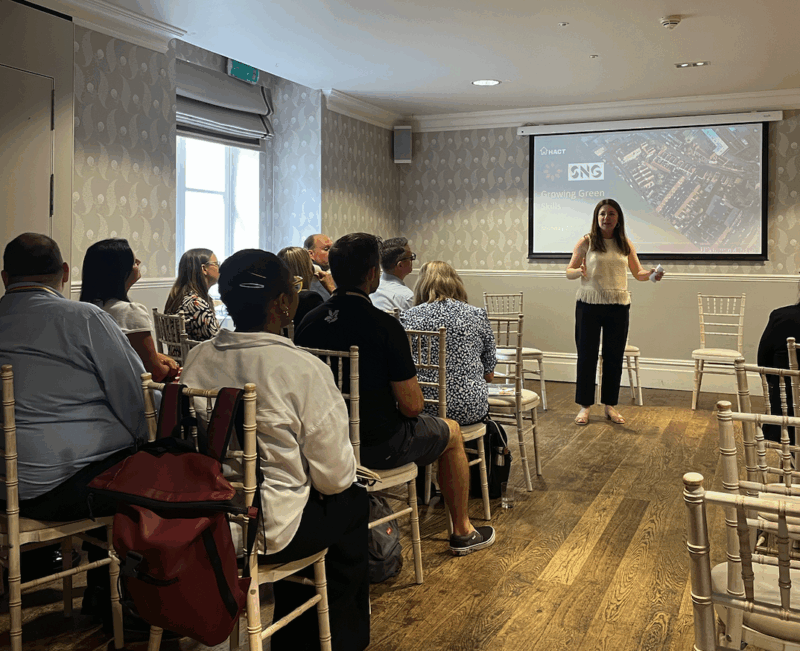
Rebecca Rieley, HACT’s Head of Communities and Projects, opened the event by outlining the vision behind Growing Green Skills. This programme is a collaboration between HACT, Sovereign Network Group (SNG) and the JPMorganChase Foundation. It focuses on creating real pathways into green work, starting with the people and communities most often left out of these conversations.
Rebecca reminded us that although the opportunity is clear, the challenges are just as real. Engaging communities in green jobs is more about creating confidence than just the schemes themselves. Awareness and belief that the green transition includes everyone, and we must design change with people, not just for them.
Panel: The goals that drive us
The panel discussion that followed brought together voices from across the sector:
- David Bussey, Clarion Futures (Chair)
- Amy Evens, SNG
- Antoine Pellet, HACT
- Lynsey Sweeney, Communities that Work
David Bussey, who chairs the national Green Skills Network, led the panel with a focus on how we can grow green skills in place, ensuring the transition to a low-carbon economy is grounded in local opportunity.
Lynsey spoke about how too many events focus on talk, without action. She welcomed the practical energy of the day and the commitment from all sides to make something happen. “Social housing is in the driver’s seat for green skills,” she said. “It’s not easy, but we’re learning, and others will learn from us.”
Antoine spoke about his work leading our Retrofit Credits programme. He explained how the project links the technical and financial side of retrofit to the human side. “It’s all about people,” he said. “If we put people first, everything else follows.”
Amy shared her insights from SNG’s green employment work. One challenge is engagement, but she’s seeing growing interest. She stressed the importance of mythbusting around what a green job actually is. Many people still assume it’s limited to construction or energy efficiency. In reality, there’s a wide range of roles, from digital to design to logistics. “We’re trying to understand what the skills gap is,” she said, “and how we meet people where they are.”
David shared a practical example. Clarion is exploring ways to fast-track driving licences for residents, including using rent payment history to help subsidise lessons. It’s a reminder that even simple, tangible changes can open doors to employment.
Breakout discussion 1: a just transition to net zero
In one of the breakout discussion rooms, the focus turned to policy and employer responsibility. The conversation included housing associations, energy companies, construction organisations and education providers.
Several attendees raised concerns about a lack of long-term investment in retrofit and net zero. Promises of billions in funding have repeatedly been scaled back. Without clear legislation, many employers still see climate action as a cost, not an opportunity.
There was agreement that this must change. Carbon reduction needs to be relevant to everyone, and framed in terms that matter to people: savings, stability, purpose.
Suggestions included:
- Developing a clear, standardised carbon compliance rating for businesses
- Building green skills into apprenticeships and existing qualifications
- Creating better incentives for reporting and compliance
- Making the economic case, not just the ethical one
The tone was honest, but not pessimistic. As one attendee put it, “At its core, this is about people persuading other people to do things.”
Breakout 2: Empowering communities
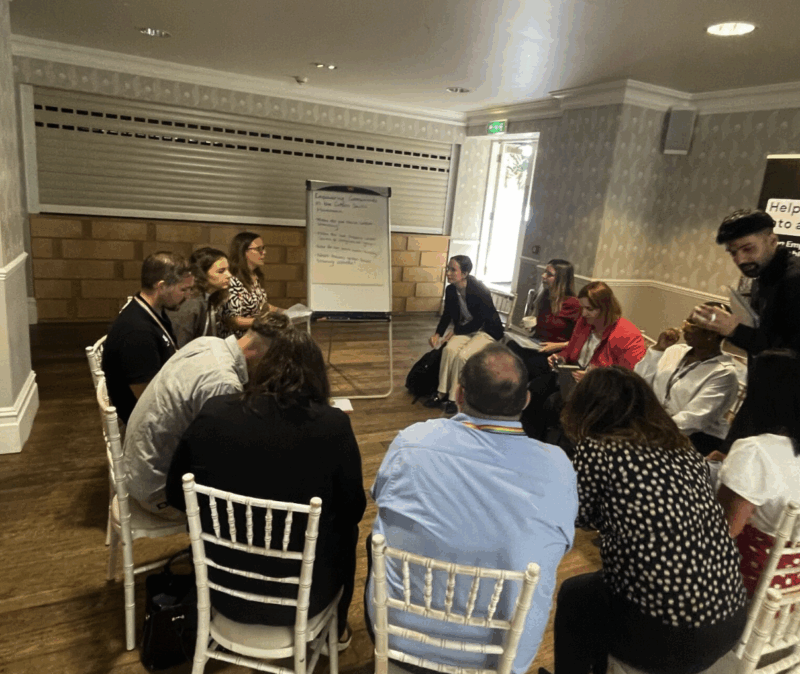
The second breakout group focused on how to make sure local people are not just aware of green skills opportunities, but able to access and benefit from them.
What’s already working?
- Listening to communities and adapting to their needs
- Attending community events and having direct conversations
- Peer-led communications and local case studies
- Green Skills Bootcamps, such as those run by local colleges
- Support from social value initiatives in procurement
What’s missing?
- Lack of entry-level roles and accessible training in some areas
- A need for flexible recruitment, including anonymised applications and simpler forms
- Gaps in education at school level about the green economy
- A need to engage women and address bias in construction roles
- Limited support for people not currently in work
Ideas included creating a pool of green skills coaches, subsidising transport, improving childcare support, and working with organisations like CIPD to remove recruitment barriers. The group also highlighted the importance of understanding local communities; for example, recognising that Mandarin is the second most spoken language in Bournemouth, Christchurch and Poole (BCP).
Looking ahead
The day ended with a renewed sense of shared purpose. The green transition is already happening. Our role is to make sure it’s fair, inclusive and rooted in place.
