22 December, 2025

HACT 2025 Roundup

HACT’s 65th year was one of focused progress – strengthening our role in supporting the social housing sector through delivery, collaboration and insight. December is always a time for reflection, so let’s take a look back at the highlights and progress we’ve made together in 2025!

2025 has again been another impactful year for HACT and the wider housing sector.  With the Government delivering on its investment promises for social and affordable housing, proposed changes in planning, the implementation of the Procurement Act, and Awaabs Law coming into play, there has been much to keep the sector busy.


Andrew van Doorn OBE

Chief Executive, HACT

“At the same time, the cost of living crisis is still having a huge impact, with residents continuing to feel the squeeze on their household budgets.

Addressing the growing levels of poverty is still a priority for HACT and social landlords across the UK. Since COVID, we have delivered nearly £10m in fuel support and we will go even further next year with a further £4m of support.

Next year we will bring forward UK HIVE (Housing Innovation and Value Exchange) –  the sector’s vehicle powering collaborative innovation and impact. We know you’ll want to be a part of it.”

“This has been our 65th year and it has been a time to reflect on the past and prepare for the future. We have taken time this year to explore with the sector’s leaders what a more collaborative future will look like. When we collaborate, use the immense potential and scale of social housing, draw on the passion and talents of all who work in it and act ambitiously together, we can drive more impact.

Our work is only made possible by the hundreds of organisations and thousands of people who support and work with us to drive impact. I want to say a huge thank you to each and every one of you. For all that you have done, for all that you are doing today and for everything that we will do together in 2026.”

Social Value

Supporting organisations to understand, measure and evidence social value remained at the core of HACT’s work in 2025.
Our Social Value Bank and Built Environment Bank
 continued to support and ever increasing number of organisations
to evidence impact in a way that is meaningful, comparable and rooted in lived experience,
demonstrating the value of moving beyond inputs towards outcomes that genuinely matter.

The amount of social value generated across our platform through your programmes, projects and initiatives over the year

The amount of direct wellbeing created and measured over the year

The number of individuals lives who have been directly impacted through your work this year

UK Social Value Bank V.6


In 2025, the UK Social Value Bank was expanded with the launch of its sixth version, introducing updated wellbeing values aligned with the latest WELLBY approach to social value quantification. This update ensures continued compliance with HM Treasury Green Book guidance and reflects significant advances in wellbeing research, data availability and best-practice methods for estimating causal impact.

Our wellbeing valuations have expanded and now include:

  • Personal wellbeing outcomes such as improved overall life satisfaction and improved children’s life satisfaction.
  • Wellbeing measures linked to employment, training and skills such as being on a traineeship and adult learning outcomes (common in expanded social value frameworks).
  • Broader wellbeing influences such as reduction in loneliness and improved digital inclusion, which have been included in related valuation frameworks that feed into UKSVB-aligned work.
  • Home and neighbourhood outcomes such as reduced homelessness and access to green space, which are increasingly reflected in up-to-date wellbeing valuation sets.

…among many others.

New methodology notes have been published, setting out both the overarching approach to wellbeing valuation and detailed outcome-level calculations.


Social Value Conference 2025


In April we delivered our most impactful Social Value Conference yet, bringing together practitioners, leaders and policymakers to explore how social value can be delivered more effectively across the sector, with our unifying theme:
Raising the bar.

There was lots to talk about as 2025 marked a step-change in expectations around social value. The Procurement Act 2023, which came into force in February, placed social value at the heart of public procurement through the shift from MEAT to MAT. At the same time, updated policy guidance sharpened the focus on transparency, consistency and accountability.

The discussions were full of energy, challenge and clear oportunity asking questions like How do we evidence social value credibly? How do we avoid “social washing” in an increasingly regulated environment? How do we ensure social value remains rooted in real outcomes for people and places?


Catch-up on the packed programme here

“What an incredible conference.
Very informative, but also heartwarming to see
how much impact different projects have had.
Looking forward to next year’s already!”

Our Chief Executive reflects on the conference...

Closing reflections – HACT SVC25 – 03.03.25

Our Chief Executive Andrew van Doorn OBE closes the HACT Social Value Conference 2025 with some reflections.

Retrofit Credits


2025 marked a further step forward for Retrofit Credits, as our Ashden award–winning initiative continued to mature and embed itself across the social housing sector.  

2025 highlights

During the year, Retrofit Credits was onboarded onto the National Grid framework and became part of the NECA marketplace, strengthening its position within the wider retrofit and decarbonisation landscape and making it easier for organisations to engage with the programme. 

A key focus throughout 2025 was the continued hyper-localisation of Retrofit Credits, supporting locally grounded retrofit projects that respond directly to community need. Retrofit can deliver more than carbon reduction alone, creating social value that is rooted in place and experienced by residents and communities. 

Maintaining trust and credibility remained central to the programme. Retrofit Credits once again successfully completed its Verification and Validation Body audit, providing assurance that carbon reductions and associated social value continue to be measured and reported to a high standard. 

Retrofit Credits in numbers

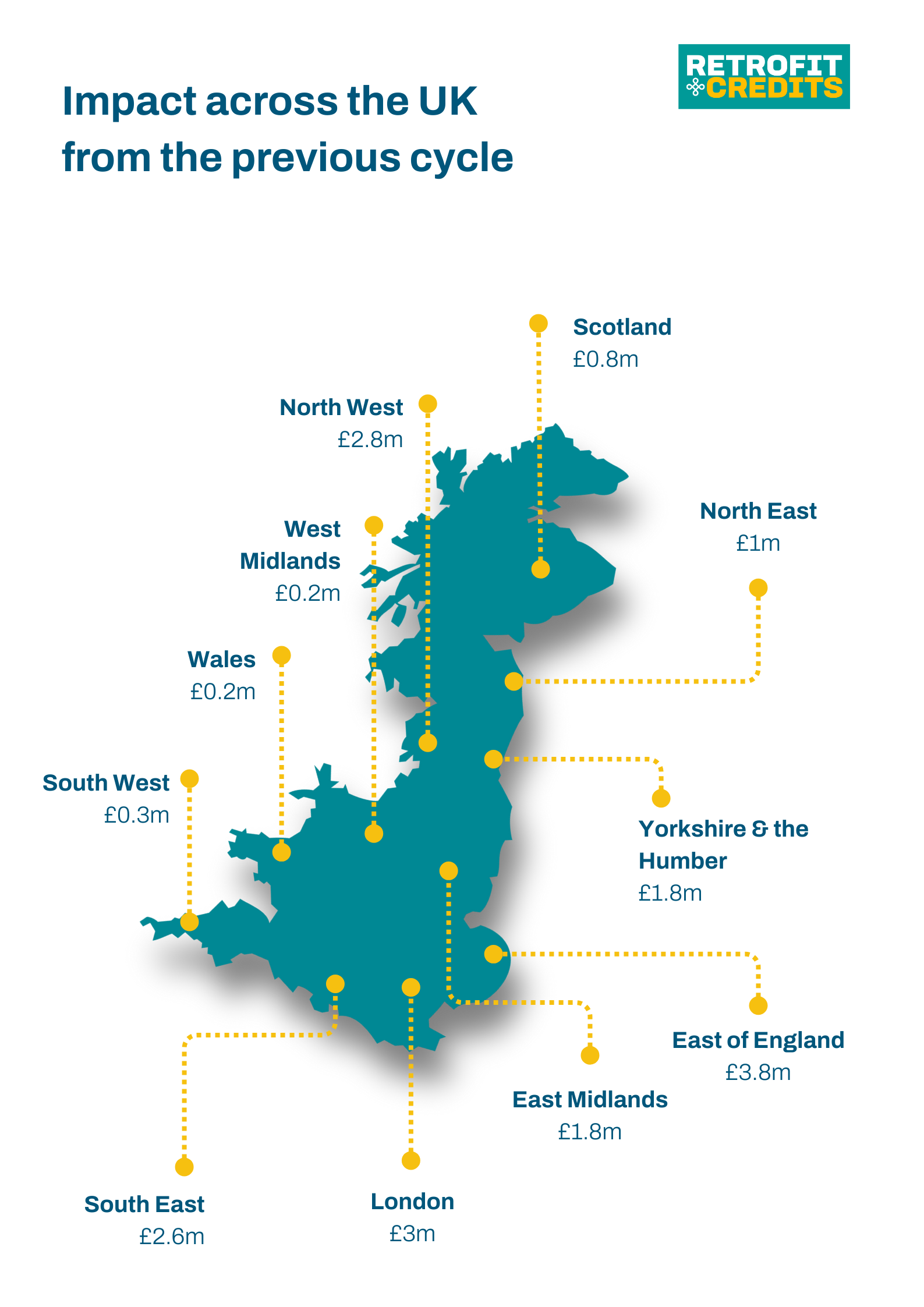
The amount of social value generated in 2025

The amount of social homes included in the programme this year

Tonnes of CO2e reduction through Retrofit Credits in 2025

If you’re looking to start 2026 by supporting retrofit that delivers real benefits for communities,
as well as carbon reduction, our case studies show how organisations are already getting involved.
You can also book a conversation with the team to explore next steps.
 

If you are a Housing Association, now’s the time to submit your data for 2025!

Fuel Fund

Our Fuel Fund initiative has continued to provide vital support to households facing energy cost pressures in 2025.  

Delivery was made possible through collaboration with more than 381 housing associations, local authorities, and charities across England, Scotland, and Wales, with support reaching communities across the UK.  

HACT would like to thank our funders, Energy Saving Trust and the Fusion21 Foundation, for their continued support in making this work possible. 

The amount distributed this year through the Fund

The number of households received support with their energy costs

The amount paid directly to fuel providers

The Centre for Excellence in Community Investment


A year of change and progress

The Centre for Excellence in Community Investment continued to provide a hub for connection, learning and collaboration across the sector in 2025. Through research, networking and practical support, the Centre enabled housing organisations and community partners to share knowledge, explore innovative approaches and strengthen their capacity to deliver meaningful outcomes.

Highlights this year included the Community Investment Conference, which brought together practitioners from across the UK to reflect on lessons learned and share best practice, and the ongoing Green Skills initiative, which piloted local projects and provided actionable insights for developing sustainable, community-focused opportunities.

By fostering collaboration and amplifying the impact of collective efforts, the Centre is laying the groundwork for implementing real, structural change in 2026

Anti-Poverty Series

2025 also saw the launch of the Anti-Poverty Series, a programme designed to explore the causes and solutions to poverty in communities across the UK. Kicking off in March, the series has created space for conversation, learning and collaboration, and will conclude in early 2026 with a synthesis of findings and actionable recommendations for organisations working to reduce poverty.

The series has provided a dedicated space for housing professionals, sector partners and residents to come together, share experiences, and test practical approaches to building financial resilience. Over the past year, the programme has highlighted the real-life impacts of issues such as fuel poverty, digital exclusion, furniture poverty and in-work hardship, while also identifying opportunities for landlords and partners to embed long-term, community-focused solutions. Continuing into 2026, it helps shape frameworks and tools that can be applied across the sector, ensuring that interventions reflect lived experience and deliver meaningful, sustainable impact.

Community Investment Conference 2025

In November, HACT its most successful in-person Community Investment Conference yet with the theme “shaping future communities, together.”

Attendees represented housing associations, local authorities, VCSEs, funders, contractors, think tanks, public health teams, residents, board members and policy roles.

  • 220 attendees from across all four nations of the UK, with capacity increased due to demand
  • The only in-person conference dedicated solely to community investment in social housing in 2025
  • 97% of respondents said they would recommend the conference to a colleague or partner
  • 99% left feeling inspired and energised to deliver impact in their communities
  • 94% said the conference provided interesting and insightful views on community investment
  • 85% valued the space to connect with colleagues across the sector, a 7% increase on 2024
  • 75% identified new potential projects, partners or collaborations, up 12% year on year
  • 74% felt positive about the future of community investment, a 10% increase on last year

“Another fantastic conference! Thanks and congratulations to the HACT team for pulling off a brilliant event. This is my annual boost of optimism, inspiration and connection. I feel privileged and proud to work alongside community investment colleagues in the social housing sector.”

Jo Hannan, Head of the Fusion21 Foundation

The strength of the conference was not only in its programme, but in the depth of participation and openness from those who joined us in Birmingham.

Throughout the day, attendees actively shared experiences, challenged assumptions and explored new ways of working together, creating an environment that felt both supportive and ambitious. Conversations extended beyond sessions into networking spaces, with many participants reflecting on the value of having dedicated time to think, connect and learn alongside peers facing similar challenges.

The breadth of perspectives, from residents and frontline practitioners to strategic leaders and partners, laid bare the importance of community investment as a core function within social housing. Resources, reflections and session materials from the day are available to support continued learning and collaboration.

Resources here
The Green Skills project

HACT continued to develop the Green Skills programme this year, building on work launched in 2022 to support social housing communities to access training and employment opportunities linked to the transition to net zero.

This year saw the release of the Growing Green Skills learning journal, produced in partnership with Sovereign Network Group and funded by the JPMorganChase Foundation, alongside an in-person event in Bournemouth that brought together housing providers, education partners and local stakeholders. Combining national knowledge sharing through the Green Skills Network with a place-based pilot in Bournemouth, Christchurch and Poole, the programme continues to explore how housing providers can play a practical role in creating inclusive pathways into the green economy and supporting a just transition rooted in local communities.

Read/download the learning journal

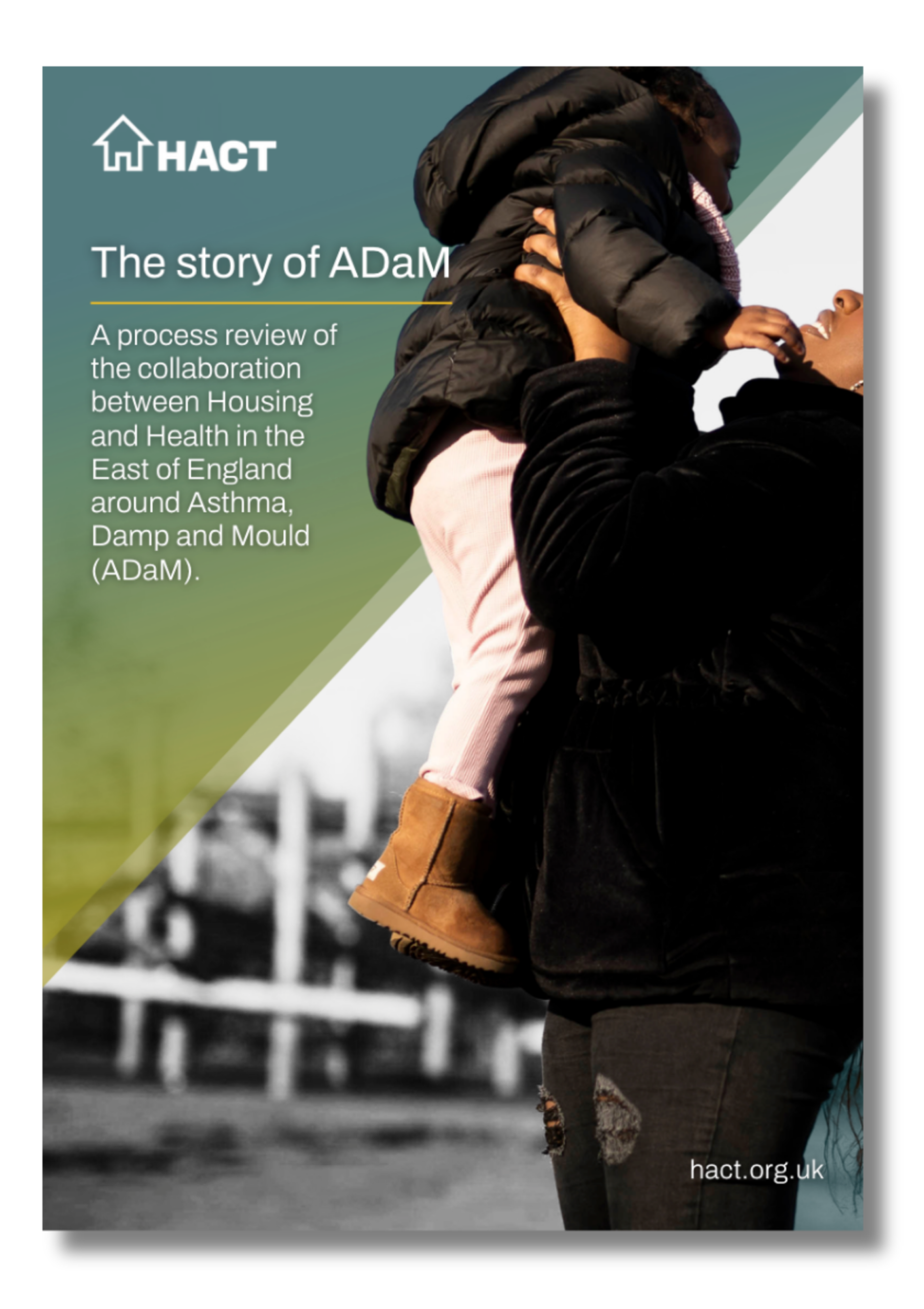
The Story of ADaM: A research report on housing conditions and respiratory health


In March, HACT published The Story of ADaM, a research report examining how housing conditions such as damp and mould directly impact respiratory health, and how closer collaboration between housing and health can lead to better outcomes for residents.

Working alongside public health teams in Bedford Borough, Central Bedfordshire and Milton Keynes, and housing associations Amplius, Peabody and bpha, HACT played a central role in documenting and analysing this cross-sector partnership. Drawing on stakeholder interviews and best practice review, the report captures how shared data, joined-up pathways and preventative approaches can address health inequalities and support earlier intervention. The findings provide practical insight into how housing providers can work more effectively with health partners to improve resident wellbeing and contribute to long-term system change.

This work represents a significant milestone for us all, demonstrating the value of cross-sector collaboration and, most importantly, its potential to deliver lasting improvements for residents across the UK.

Download the report here

Turning policy into practice: Awaab's Law

2025 saw heightened focus on housing quality and resident safety. Safe homes depend on good data — and good data depends on shared standards, trust and collaboration. The introduction of Awaab’s Law marks one of the most significant shifts in housing regulation in recent years. For housing associations and local authorities, the law also also brings new responsibilities and heightened scrutiny.

Compliance is no longer about having the right policies in place; it requires robust evidence, clear audit trails and the ability to demonstrate that issues are being identified, prioritised and resolved consistently. HACT worked with Ministry of Housing, Communities and Local Government alongside partners from across the sector to help the development of sector data standards aligned with Awaab’s Law, helping providers improve housing condition data and protect residents’ health and safety.

Read Government Guidance

UK HIVE: a new national hub for collaborative innovation in social housing

In September, HACT launched UK HIVE, a purpose-built centre for innovation, collaboration, research and development in the social housing sector.

This initiative emerged from a year-long engagement with over 150 organisations and stakeholders and is driven forward by HACT’s Social Housing Collaboration & R&D Roadmap, a strategic vision for how the sector can work together more effectively over the next 3–5 years.

UK HIVE is designed as a national engine for collective problem–solving rather than a single project. It’s a space where organisations can explore new ideas, test approaches, share evidence and scale what works.

By launching UK HIVE, we’ve put ourselves in a position to change in how the social housing sector approaches challenges – with the coming year set to drive the foundations for shared investment, learning and infrastructure that benefits all providers and, ultimately, communities across the UK.

Learn more here

HACT can only be as strong as the people and organisations we work alongside, and we want to take this moment to say thank you.

In particular, we want to extend our gratitude to those who donated to us as a 65th birthday gift. Your support is what allows us to keep creating impact.

Every conversation, challenge and collaboration helps shape better tools, stronger partnerships and, ultimately, better outcomes for communities. We are so grateful to be working alongside you and look forward to continuing this work together in 2026!